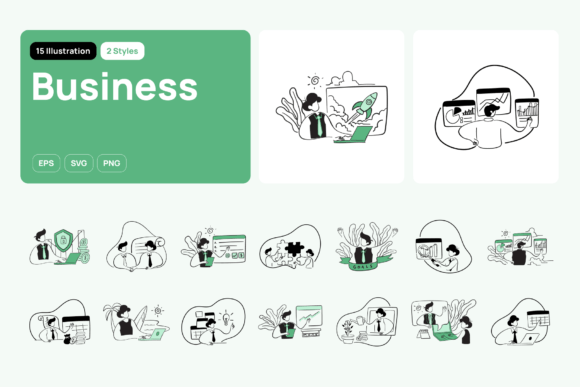
Business Strategy and Innovation Design
In the crowded landscape of modern branding, visual clarity is often the difference between a concept that resonates and one that gets lost. When we talk about Business Strategy and Innovation Design, we are referring to more than just a collection of shapes; it represents a comprehensive approach to communicating complex ideas through adaptable, high-quality visuals. For designers, entrepreneurs, and marketers alike, the ability to scale a design from a tiny mobile icon to a massive billboard without losing a single pixel is not just a luxury—it is a necessity. This is where vector-based assets become the backbone of effective communication.
The core appeal of this design philosophy lies in its flexibility. Unlike raster images that degrade when stretched, vector graphics maintain their crisp edges and clean lines regardless of size. Whether you are crafting a sleek landing page for a tech startup or designing an intricate infographic for a corporate annual report, the underlying structure remains intact. This reliability allows creative professionals to focus on the message rather than worrying about technical limitations. The personality of these designs is inherently professional yet dynamic, capable of shifting tone based on how they are manipulated, recolored, or combined with other elements.
The Power of Scalable Vector Graphics in Branding
One of the most significant advantages of working with 100% vector files is the freedom to transform them endlessly. In the world of brand identity, consistency is king. A logo designed as a vector can be resized for a business card, a website header, or a vehicle wrap without any loss of quality. This scalability ensures that your brand looks equally impressive across all touchpoints. When you have access to 100 vector source files in EPS format, you are essentially holding the master keys to your visual ecosystem.
Consider the practical application in web design and mobile web development. Screens vary wildly in resolution, from standard HD displays to retina screens on the latest smartphones. Raster images often blur or pixelate on high-density displays, breaking the user's immersion. Vector graphics, however, render perfectly at any resolution, ensuring that your hero image or navigation icons remain sharp and legible. This technical precision directly influences readability and visual hierarchy, guiding the user's eye exactly where you want it to go.
Beyond digital applications, the versatility extends to print media. From packaging design to large-format banners, vectors allow for infinite scaling. If you need to increase the size of an illustration by 500% for a trade show booth, a vector file handles the transformation effortlessly. This capability is crucial for commercial projects where production constraints often demand last-minute size adjustments. The ability to add, remove, or recolor elements without compromising the integrity of the artwork makes these assets indispensable for agile marketing teams.
Enhancing Visual Hierarchy and Audience Engagement
Effective design is about more than aesthetics; it is about function. The right visual elements can dramatically improve how an audience perceives information. In editorial design and infographics, clear visual separation helps break down dense data into digestible chunks. By using distinct shapes and lines inherent in vector art, designers can create a strong visual hierarchy that leads the reader through a narrative logically.
When applied to social media graphics, these adaptable assets allow for rapid iteration. Marketers can tweak colors to match seasonal campaigns or adjust layouts to fit different platform dimensions (Instagram square vs. LinkedIn rectangle) instantly. This agility fosters higher audience engagement because the content feels fresh and tailored. Furthermore, the clean lines and precise geometry often associated with vector illustrations convey a sense of professionalism and modernity, reinforcing trust in the brand.
For small business owners and hobbyists, the barrier to entry has never been lower. With tools that allow easy editing of vector files, you don't need to be a graphic design expert to customize a template. You can transform a generic layout into something unique that reflects your specific voice. This democratization of design empowers creators to produce premium font pairings and custom illustrations that rival those of large agencies.
Practical Applications Across Industries
The utility of these design assets spans a wide array of industries and project types. In the realm of logo design, the precision of vector paths ensures that the mark remains recognizable at any scale. Whether it is a minimalist sans serif font paired with a geometric icon or a complex script font intertwined with organic shapes, the vector format preserves every detail.
For publishers and bloggers, creating compelling landing pages requires visuals that load quickly and look great. Vector-based illustrations are typically lightweight, contributing to faster page load times—a critical factor for SEO and user retention. Additionally, the ability to edit text and elements directly within the file means that content updates can happen seamlessly without needing to regenerate entire image files.
Entrepreneurs launching new products will find these assets particularly valuable for product packaging. The high-resolution JPGs included alongside the vector sources provide immediate options for mockups and presentations, while the EPS files offer the depth needed for final production. This dual-format inclusion bridges the gap between conceptual planning and physical manufacturing.
Evaluating Fit and Choosing the Right Assets
Selecting the right design elements involves understanding your project's specific needs. Start by evaluating the context: Is this for a digital-first campaign or a traditional print run? Does your brand require a playful, handwritten aesthetic, or does it demand the authority of a structured serif font? While the Business Strategy and Innovation Design template offers a robust foundation, customization is key.
When reviewing the included styles, pay attention to line weights and color palettes. Ensure they align with your existing brand guidelines. Testing font pairings early in the process can save time later; try combining the vector illustrations with various typefaces to see what creates the best balance. Remember that a modern typography choice might clash with overly ornate vector details, so simplicity often yields the strongest results.
Licensing is another critical consideration. Since these assets are intended for commercial use, verify that the license covers your intended scope, whether it is for a single client project or unlimited internal use. Understanding the terms ensures that your investment in these design assets is protected and compliant. Ultimately, the goal is to leverage these tools to tell your story effectively, ensuring that every element serves a purpose and contributes to a cohesive, professional outcome.