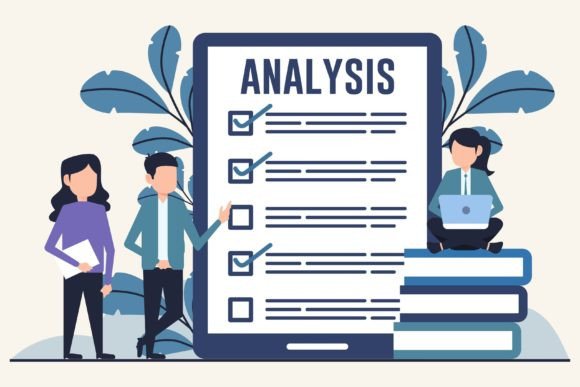
Business Team Analyzing Financial Growth: A Visual Blueprint for Success
In the dynamic landscape of modern commerce, data is the currency that drives decision-making. However, raw numbers on a spreadsheet often fail to capture the full story of a company's trajectory. This is where the concept of a Business Team Analyzing Financial Growth becomes vital—not just as a physical activity in a boardroom, but as a powerful visual metaphor used in design and communication. When translated into high-quality graphics, this scene represents clarity, strategy, and forward momentum. For professionals, creators, and business owners, understanding how to leverage such imagery can transform abstract financial concepts into tangible, actionable insights.
The Power of Visualizing Strategic Analysis
Why do we need visuals to represent financial growth? The human brain processes images 60,000 times faster than text. When a team is depicted analyzing charts, graphs, and trends, it immediately signals collaboration and intelligence. A graphic illustrating a Business Team Analyzing Financial Growth serves more than an aesthetic purpose; it acts as a cognitive anchor. It helps stakeholders visualize the path from current performance to future profitability.
For designers and content creators, finding the right asset is crucial. The ideal illustration should not be a static photograph but a flexible vector design. Vectors allow for infinite scalability without quality loss, ensuring that whether the image appears on a tiny mobile screen or a massive billboard, the details remain crisp. This technical capability is essential when the subject matter involves complex data visualization elements like bar charts, upward-trending lines, and pie charts that must remain legible at any size.
Key Characteristics of Effective Financial Illustrations
When evaluating a design template featuring a business team in analysis mode, several characteristics stand out as markers of quality:
- Scalability: The ability to scale up or down without pixelation is non-negotiable. Since financial reports often require zooming in on specific data points, the underlying vector format ensures that every line remains sharp.
- Editability: A true asset allows users to transform, recolor, or add elements. Perhaps your brand uses blue, but the default template is green. With vector sources, you can instantly match your corporate identity.
- Contextual Flexibility: The scene should be adaptable. Can you remove a character to focus on the data? Can you add a speech bubble with a key metric? The best designs anticipate these needs.
- Professional Tone: The characters and setting should convey competence and focus. Avoid overly cartoonish styles unless targeting a very casual audience; generally, a clean, modern look resonates better with financial topics.
Practical Applications Across Digital Platforms
The versatility of a Business Team Analyzing Financial Growth illustration makes it a staple for various digital projects. Its application extends far beyond simple decoration, serving as a functional component of user experience and brand storytelling.
Web Graphics and Landing Pages
Landing pages are often the first point of contact between a service provider and a potential client. In the fintech sector, insurance, or consulting industries, trust is paramount. Placing a high-resolution image of a team deeply engaged in financial analysis immediately establishes credibility. It suggests that the company behind the website takes data seriously and employs experts who understand market dynamics. Because these files come in EPS formats, web developers can optimize them for fast loading speeds while maintaining visual fidelity.
Mobile Web and App Interfaces
With the majority of internet traffic coming from mobile devices, responsiveness is critical. Vector-based illustrations adapt seamlessly to different screen sizes. An app dashboard showing investment portfolios or expense tracking can utilize elements from a "team analyzing" set to guide the user. For instance, a simplified icon derived from the main illustration can serve as a navigation button, maintaining visual consistency throughout the user journey.
Banners and Hero Images
Hero images—the large, prominent banners at the top of a webpage—require high impact. A Business Team Analyzing Financial Growth hero image can effectively communicate the value proposition of a SaaS platform or a financial advisory firm. The ability to recolor elements means marketing teams can create seasonal variations (e.g., holiday themes) or campaign-specific versions without commissioning new artwork from scratch.
Who Benefits from These Design Assets?
The utility of these vector resources spans a wide demographic of professionals and creators:
- Business Owners: Entrepreneurs creating pitch decks or investor presentations need visuals that command respect. A custom-edited vector illustration can make a quarterly report feel bespoke and professional.
- Graphic Designers: Freelancers and agency designers benefit from having a library of 100 vector source files. Instead of starting from zero, they can manipulate existing high-quality assets to meet tight deadlines.
- Content Creators and Bloggers: Writers covering finance, economics, or startup culture often struggle to find unique images. Stock photos can feel generic, whereas editable vectors offer a fresh, distinct look that stands out in social media feeds.
- Marketing Teams: Coordinating campaigns across multiple channels requires consistent branding. The ability to transform and scale these assets ensures that the message remains uniform from email newsletters to print brochures.
Strengths, Considerations, and Limitations
While vector illustrations of business teams offer significant advantages, it is important to approach their use with a clear understanding of their strengths and limitations.
Strengths and Value Proposition
The primary strength lies in the quality retention. Unlike raster images (JPGs or PNGs), which degrade when enlarged, vectors are mathematical descriptions of shapes. This means you can take a small icon of a chart and expand it to cover a conference backdrop without losing a single pixel of detail. Furthermore, the inclusion of high-resolution JPG previews alongside the EPS source files provides immediate usability for those who do not have vector editing software installed.
Another major advantage is cost-effectiveness. Commissioning custom illustrations for every project is expensive. A package containing 100 vector sources allows for endless variations, effectively providing a year's worth of assets for a fraction of the cost of custom work.
Considerations for Implementation
However, using these assets does require some technical proficiency. To fully exploit the editability features—such as removing elements or changing colors—users need access to vector graphics software like Adobe Illustrator, CorelDRAW, or free alternatives like Inkscape. If a user lacks these tools, they are limited to using the provided JPG files, which restricts customization options.
Additionally, there is the risk of overuse. If a specific style of "business team" illustration becomes too ubiquitous in an industry, it may lose its impact. Designers must ensure they modify the templates enough to align with their unique brand voice rather than using them in a generic, off-the-shelf manner.
Real-World Scenarios and Use Cases
To illustrate the practical value, consider a few real-world scenarios where a Business Team Analyzing Financial Growth asset would be transformative:
Scenario 1: The Startup Pitch Deck
A tech startup is preparing to present to venture capitalists. They need to show how they plan to achieve profitability. Instead of a dry slide with bullet points, they use a customized vector illustration of a diverse team looking at a rising graph. They change the graph color to match their logo and add their company name to the projection screen within the image. The result is a memorable, cohesive narrative that reinforces their vision.
Scenario 2: The Annual Report Infographic
A mid-sized corporation is releasing its annual report. They want to highlight the collaborative effort behind their success. By extracting individual elements from the vector file, they create a step-by-step infographic showing how different departments contribute to financial health. The clean lines of the vector art ensure the infographic prints beautifully on high-quality paper.
Scenario 3: The Mobile Banking App
A fintech developer is designing the "Insights" tab of a new banking app. They need icons that represent "Team Review," "Growth Projection," and "Risk Assessment." Using the source files, they isolate specific components—like a magnifying glass over a chart or two figures shaking hands—and simplify them into flat icons that fit the app's minimalist aesthetic.
Evaluating Suitability for Your Project
Before integrating these assets into your workflow, ask yourself a few critical questions to ensure they meet your specific needs:
- Do I have the necessary software? If you cannot open EPS files, will the JPG resolution suffice for your intended use?
- Does the style match my brand? Is the illustration too formal for a playful startup, or too casual for a law firm? Remember, you can recolor and adjust elements, but the fundamental style should resonate with your audience.
- Is the context appropriate? Ensure the scenario depicted (analyzing growth) accurately reflects the message you are trying to convey. Misaligned imagery can confuse your audience.
Conclusion
In conclusion, the Business Team Analyzing Financial Growth concept is more than just a stock image; it is a versatile tool for communication in the business world. By leveraging 100% vector source files, professionals gain the freedom to customize, scale, and adapt visuals to fit any medium, from mobile apps to large-scale infographics. Whether you are a designer seeking efficiency, a business owner building a brand, or a creator telling a data-driven story, these assets provide the foundation for clear, impactful, and professional visual communication. Embrace the flexibility of vector design to turn complex financial narratives into compelling visual experiences that drive engagement and understanding.