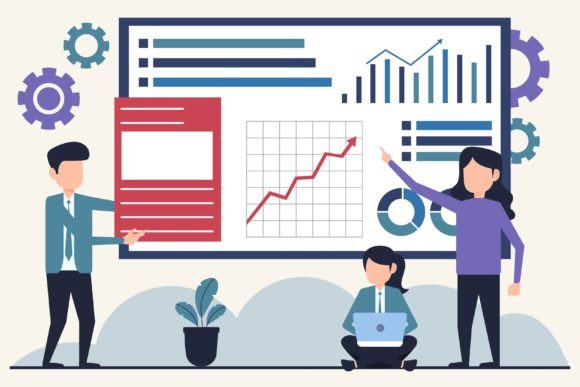
Data Analysis and Business Strategy: Turning Numbers into Actionable Plans
In the modern corporate landscape, the gap between raw information and decisive action is where success is won or lost. Data analysis and business strategy are not merely buzzwords; they represent the critical bridge connecting what is happening in your market to what you should do about it. When these two disciplines intersect, organizations move from guessing to knowing, transforming scattered metrics into a cohesive roadmap for growth. Whether you are a startup founder trying to find product-market fit or a seasoned executive optimizing supply chains, understanding this synergy is essential for navigating today's complex economic environment.
The Core Intersection of Insight and Action
At its simplest, data analysis involves examining datasets to draw conclusions about the information they contain. However, without a strategic framework, these conclusions remain isolated facts. Business strategy provides that framework. It defines the goals, identifies the target audience, and outlines the steps necessary to achieve long-term objectives. When combined, data analysis informs the strategy with empirical evidence, while the strategy gives the data a purpose and direction.
Imagine a retail chain noticing a dip in sales during the third quarter. A purely analytical approach might simply report the percentage decline. A strategic approach asks why. By diving deeper into the data—perhaps analyzing regional weather patterns, competitor promotions, or inventory turnover rates—the business can formulate a specific counter-strategy. This could involve adjusting marketing spend, altering stock levels, or launching a targeted loyalty program. The data tells the story; the strategy writes the next chapter.
Real-World Scenarios Across Industries
The application of data-driven strategy varies significantly depending on the industry, yet the underlying principle remains consistent: use evidence to reduce risk and maximize opportunity.
Retail and E-Commerce
In the competitive world of online retail, customer behavior is king. Businesses utilize data analysis to track click-through rates, cart abandonment, and purchase history. Strategically, this information allows companies to personalize user experiences. For instance, if data shows that a specific demographic frequently abandons carts at the shipping page, a strategic response might be to offer free shipping thresholds or simplify the checkout process. This isn't just about fixing a bug; it's about aligning operational tactics with consumer psychology to boost conversion rates.
Healthcare and Patient Care
Hospitals and clinics rely heavily on predictive analytics to manage resources. By analyzing historical admission data, seasonal illness trends, and patient demographics, healthcare administrators can strategize staffing schedules and inventory management more effectively. If data predicts a surge in flu cases next month, the strategy shifts to securing additional vaccines and scheduling extra nursing shifts in advance. Here, the stakes are high, and the ability to translate data into proactive planning directly impacts patient outcomes and operational efficiency.
Financial Services and Risk Management
Banks and investment firms operate in an environment defined by uncertainty. Data analysis helps identify patterns in market fluctuations and credit risks. Strategic decisions regarding loan approvals, investment portfolios, and fraud detection protocols are built upon these insights. A bank might use machine learning models to analyze transaction behaviors in real-time. If a pattern deviates from the norm, the strategic system automatically flags the account for review, preventing potential losses before they occur. This demonstrates how strategy automates decision-making based on rigorous data validation.
Visualizing Complex Concepts for Clarity
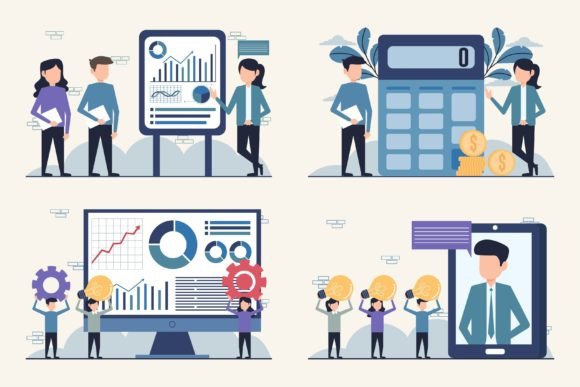
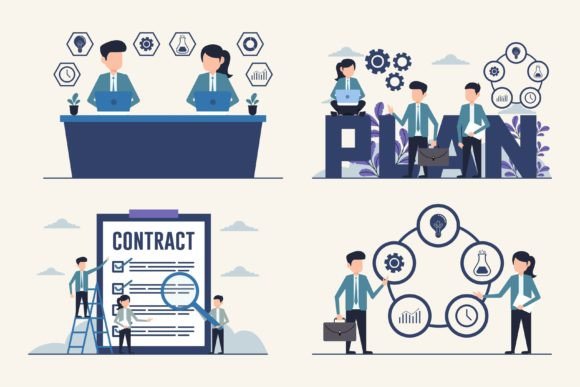
One of the most significant challenges in implementing data analysis and business strategy is communication. Raw numbers and complex algorithms are often difficult for stakeholders to digest. This is where visual storytelling becomes a powerful tool. To convey strategic insights effectively, teams need clear, adaptable graphics that can transform abstract data into understandable narratives.
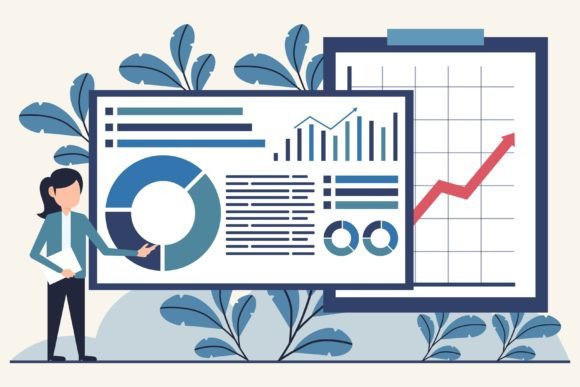
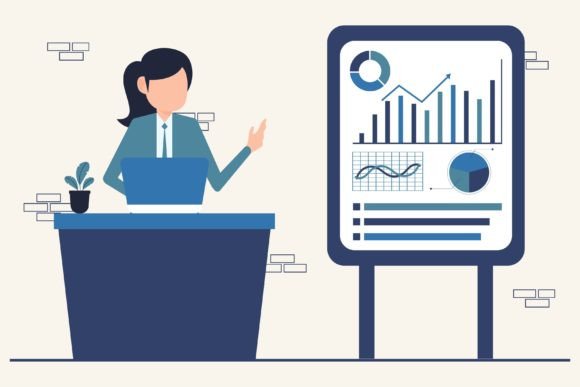
Consider the need for a presentation to the board of directors. You cannot simply dump spreadsheets onto a screen. You need infographics that highlight key trends, flowcharts that map out strategic processes, and diagrams that illustrate market segmentation. In this context, having access to high-quality vector assets is invaluable. Because all elements in professional design templates are 100% vector, you can easily edit vector files in any vector graphics software to match your specific brand identity. You can transform, scale up or down, add or remove elements or text, and recolor without losing quality.
This flexibility is crucial when presenting data. Perhaps your initial analysis suggests a pivot in strategy, requiring a complete overhaul of your visual aids. With scalable vector graphics, you can instantly adapt your charts and illustrations to reflect new data points or revised strategic pillars. These assets are suitable for your design needs across various platforms, including web graphics, mobile web interfaces, landing pages, banners, hero images, and infographics. Whether you are creating a detailed infographic for a white paper or a simple banner for a marketing campaign, the ability to maintain crisp resolution at any size ensures your message remains clear and professional.
Practical Benefits for Designers and Strategists
For professionals tasked with communicating strategy, the technical limitations of raster images can be a hindrance. Vector sources solve this problem entirely. You will get 100 vector source files in EPS formats, along with included high-resolution JPGs for immediate use. This means a graphic designer can take a complex data visualization concept and refine it endlessly until it perfectly represents the business narrative. A marketer can resize a hero image for a desktop site and then instantly repurpose it for a mobile app without worrying about pixelation. This versatility supports the agile nature of modern business strategy, where plans evolve rapidly based on incoming data.
Common Considerations Before Implementation
While the benefits are clear, adopting a data-driven strategic approach requires careful consideration. First, data quality is paramount. Garbage in, garbage out remains a fundamental truth. If the data feeding your analysis is incomplete, outdated, or biased, your resulting strategy will be flawed. Organizations must invest in robust data collection and cleaning processes before attempting to build strategies on top of them.
Secondly, there is the human element. Data can tell you what happened, but it often struggles to explain why people behave the way they do. Qualitative insights, such as customer interviews and market sentiment, should complement quantitative data. A balanced strategy integrates both hard numbers and human nuance.
Finally, consider the tools and talent required. Effective data analysis often requires specialized software and skilled analysts. Similarly, translating those insights into a viable business strategy requires experienced leadership. Companies must assess whether they have the internal capacity to handle these tasks or if they need to partner with external experts or invest in training programs.
Strengths and Limitations of the Approach
The primary strength of combining data analysis with business strategy is objectivity. It removes emotional bias from decision-making, allowing leaders to make choices based on evidence rather than gut feeling. It also enables scalability; once a data-driven model is proven successful, it can often be replicated across different departments or markets with greater confidence.
However, limitations exist. Over-reliance on historical data can lead to "analysis paralysis," where teams spend so much time studying the past that they miss emerging opportunities in the present. Additionally, data cannot predict black swan events—unforeseen occurrences that drastically change the market landscape. A robust strategy must include contingency plans that account for variables that data cannot currently measure. Furthermore, the cost of implementing sophisticated data infrastructure can be prohibitive for smaller businesses, requiring a careful cost-benefit analysis before full-scale adoption.
Ultimately, data analysis and business strategy are dynamic partners. They require constant refinement, clear communication, and a willingness to adapt. By leveraging the right tools, including flexible and high-quality visual assets, organizations can ensure their strategic messages are not only accurate but also compelling and accessible to every stakeholder involved.