Mastering Business Planning and Time Management
Running a successful venture or managing a complex creative project requires more than just raw talent; it demands structure. At the heart of this structure lies the dual discipline of business planning and time management. These are not merely administrative tasks but the foundational pillars that allow entrepreneurs, freelancers, and small business owners to transform abstract ideas into tangible results. When you combine a clear strategic roadmap with the ability to execute tasks efficiently, you create an environment where productivity thrives and stress diminishes.
For many adults navigating their careers, whether they are beginners launching a startup or seasoned professionals optimizing their workflow, understanding these concepts is crucial. It is about knowing where you want to go and having the schedule to get there without burning out. This approach supports a wide range of goals, from increasing revenue and launching new products to simply finding a better work-life balance. By mastering these skills, you gain control over your professional destiny, ensuring that every hour spent working moves you closer to your ultimate objectives.
The Core Value of Strategic Organization
Business planning involves defining your mission, setting specific goals, and outlining the steps necessary to achieve them. It is the blueprint for your success. Without a plan, even the most brilliant idea can falter due to a lack of direction or resources. Time management, on the other hand, is the art of organizing your day to maximize efficiency. It ensures that the tasks outlined in your business plan are actually completed within the available timeframe.
Together, these disciplines offer immense value. They provide clarity, reducing the anxiety that often comes with uncertainty. When you have a plan, you know exactly what needs to be done next. When you manage your time effectively, you ensure that those tasks are prioritized correctly. This synergy allows you to focus on high-impact activities rather than getting bogged down by trivial matters. For creators and marketers, this means more time for innovation and less time worrying about missed deadlines or disorganized workflows.
Visualizing Success with Flexible Design Assets
In today's digital landscape, communicating your business plan and time management strategies often requires visual aids. Whether you are presenting to investors, creating content for your blog, or designing a landing page for your service, clear visuals are essential. This is where high-quality design templates become invaluable tools. Imagine having access to a comprehensive collection of assets where all elements are 100% vector. This flexibility allows you to easily edit files in any vector graphics software, transforming your static plans into dynamic presentations.
The ability to transform, scale up or down, add or remove elements, and recolor without losing quality is a game-changer for professionals. You might need a large banner for a conference booth one week and a small icon for a mobile app the next. With vector sources, you never have to worry about pixelation or resolution issues. You can adapt a single design to fit various contexts, from web graphics and mobile web interfaces to infographics and hero images. This versatility ensures that your visual communication remains sharp and professional, regardless of the medium.
Practical Applications for Every Professional
Consider a freelance graphic designer who needs to present a project timeline to a client. Using a flexible vector template, they can quickly customize a Gantt chart or a process flow diagram. They can adjust the colors to match the client's brand, resize elements to fit a PDF report, and add specific text notes without compromising the design's integrity. Similarly, a small business owner preparing a pitch deck can use these assets to create compelling infographics that illustrate market growth or operational efficiency.
These tools are not limited to designers. Educators can use them to create engaging lesson plans about entrepreneurship. Marketers can build stunning landing pages that explain their service offerings clearly. Even hobbyists looking to organize their personal projects can benefit from these resources. The key is that the design serves the content, making complex information about business planning and time management easy to digest and visually appealing.
What to Expect in a Comprehensive Resource Pack
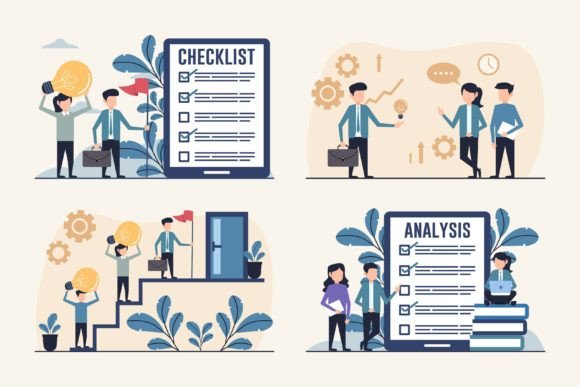
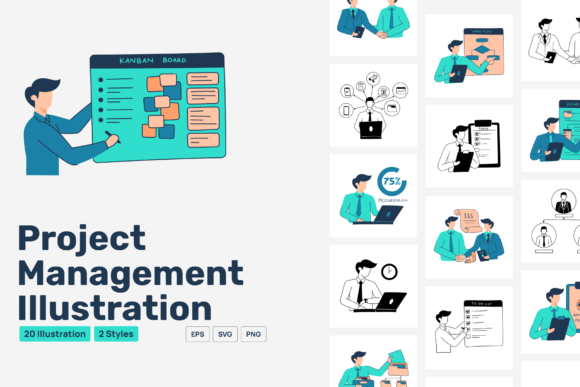
When seeking resources to support your organizational efforts, quality and format matter significantly. A robust package typically includes 100 vector source files in EPS formats. This extensive library provides a wide variety of illustrations suitable for diverse design needs. From detailed charts representing financial projections to stylized icons depicting daily schedules, having a broad selection allows you to find the perfect visual for any situation.
In addition to the editable vector files, such packages often include high-resolution JPGs. These rasterized versions are ready for immediate use in social media posts, email newsletters, or quick mockups where editing the underlying vector data isn't necessary. This dual-format approach offers the best of both worlds: the scalability and editability of vectors for long-term projects and the convenience of JPGs for rapid deployment.
Key Considerations Before You Begin
Before diving into a new system of business planning or selecting design assets, it is important to assess your specific needs. Do you require simple checklists, or do you need complex financial models? Are you designing for print, web, or both? Understanding your requirements will help you choose the right tools and templates. Furthermore, consider your technical proficiency. While vector software offers endless possibilities, it does require a learning curve. If you are new to design, look for templates that are intuitive and well-structured.
Another critical factor is consistency. Your visual identity should align with your business strategy. If your business plan emphasizes professionalism and reliability, your designs should reflect that through clean lines and a cohesive color palette. Conversely, if you are a creative agency, your visuals might benefit from bold colors and playful elements. The flexibility of vector files allows you to maintain this consistency across all your materials, from your website to your marketing brochures.
Integrating Tools into Your Workflow
Successfully integrating business planning and time management into your daily routine involves more than just theory; it requires practical application. Start by auditing your current processes. Identify bottlenecks where time is wasted or where plans fall apart. Then, introduce structured methods to address these issues. Use your chosen design assets to visualize these improvements. Create a dashboard that tracks your progress, or design a calendar that highlights key milestones.
Remember that the goal is not perfection but progress. A well-designed plan that is regularly updated is far more valuable than a perfect plan that sits unused. By leveraging high-quality, editable vector resources, you make it easier to keep your plans current and relevant. As your business evolves, so too can your visual representations of your strategy. You can easily update text, swap out outdated graphics, and restructure layouts to reflect your latest achievements and future goals.
Ultimately, the combination of strategic planning, effective time management, and adaptable design resources empowers you to take charge of your professional life. Whether you are a beginner taking your first steps or an experienced entrepreneur scaling your operations, these elements work together to create a foundation for sustained success. By embracing these practices and utilizing the right tools, you set yourself up to achieve your dreams with confidence and clarity.